
Services

Battery Storage
Development — From
Site Analysis to
Operations

Developing a utility-scale battery storage project is a multi-year process with significant regulatory, technical, and financial complexity. Blackvolt manages this process end-to-end, from initial site assessment through ongoing operations. More than 30 projects are currently in structured development. Accountability and points of contact remain with one team throughout.

Battery storage development: one partner across the full lifecycle

Most BESS projects in Austria do not fail on technology. They fail on fragmented responsibilities: one consultant identifies the site, a second negotiates the land contract, a third files the permit application, a fourth designs the grid connection. Every handoff introduces information loss, schedule delay, and additional risk.

Blackvolt operates differently. We have built battery storage development as one integrated process: eight phases, one accountable team. Every decision in phase one already accounts for the requirements of phase eight. The result is higher delivery probability, shorter project timelines, and a structure that holds up under investor and grid operator scrutiny in equal measure.

This approach is operational, not theoretical. A portfolio of 1,252 MW across development stages, with more than 600 MWh permitted in Austria, demonstrates that integrated project development works at scale.

8Project phases. One point of accountability.

From site analysis through ongoing operations: one accountable team instead of fragmented interfaces. This is the structural precondition for bankable BESS projects.

The Blackvolt value chain:
eight phases, one objective

Site Analysis

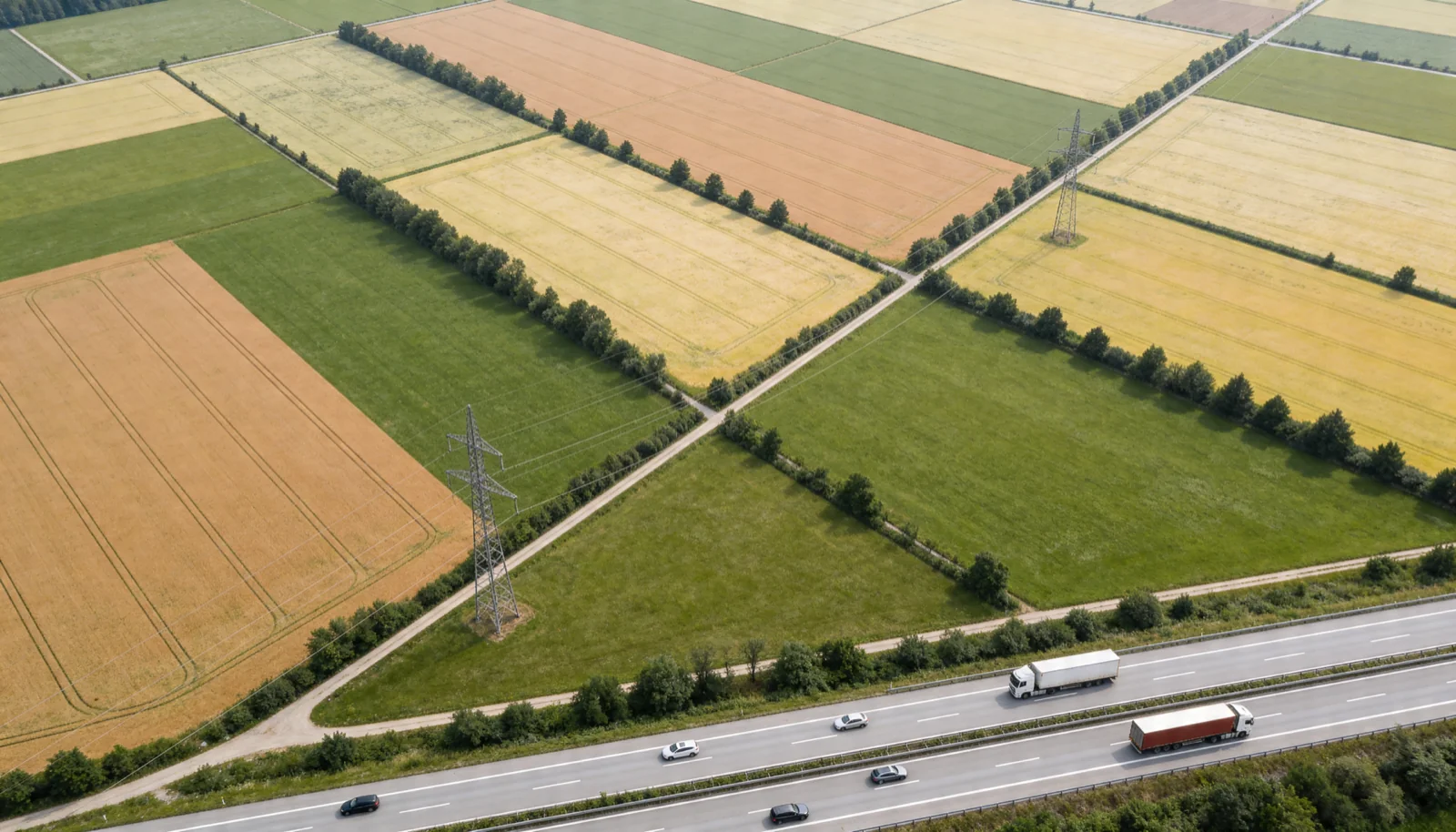
Every BESS project begins with the systematic evaluation of potential sites. Blackvolt assesses not only technical suitability of a parcel, but in parallel the regulatory framework, proximity to grid connection points, and economic viability of the location.

Our criteria cover available grid capacity, zoning classification under Austrian Raumordnung (the state-level spatial planning law), distance to residential and protected areas, and logistical accessibility for construction. The land footprint for a utility-scale battery storage facility typically ranges between 0.5 and 2 hectares, depending on power class and system configuration.

This pre-selection saves months of later project time. Only sites that are technically, regulatorily, and economically viable advance to the next phase.
Land Acquisition

Once a site is identified, we negotiate use rights directly with landowners. These can be agricultural operations, municipalities, or industrial property holders.

Blackvolt structures these agreements to work long-term for both sides: fair lease terms for landowners, predictable cost structures for the project. Securing land tenure contractually is a precondition for project bankability. Without a secured site, no project financing.

Feasibility Study & Environmental Assessment

In the third step, we prepare a comprehensive feasibility study combining technical, economic, and environmental parameters. This includes grid capacity analysis, noise assessments, ecological review under Austrian Naturschutzrecht (nature protection law), and an initial revenue model based on current market data.

The Environmental Impact Assessment (UVP — Umweltverträglichkeitsprüfung) is mandatory in Austria for installations above defined thresholds, with the threshold depending on capacity and site classification. Blackvolt prepares all required documentation to authority standards and coordinates with the relevant expert bodies. The objective is complete documentation that triggers no follow-up requests during the permitting procedure.

Permitting

Battery storage permitting is one of the most time-critical steps in project development. In Austria, utility-scale storage projects pass through different procedures depending on the federal state (Bundesland): trade-law approval under the Gewerbeordnung, electricity-law authorization under the ElWOG framework, and building permits issued under state-level Bauordnungen.

Blackvolt prepares all submission documents in-house, coordinates expert reports, and manages the full procedure with the responsible authorities. Experience from more than 30 projects in development shows that the quality of the initial submission largely determines procedure duration. An incomplete first filing can cost months. A complete one saves them.

Blackvolt currently holds permitted storage capacity of more than 600 MWh in Austria.

Grid Connection

Grid connection (Netzzutritt) for battery storage is in practice often the critical bottleneck. The available grid capacity at the connection point determines the maximum feasible plant power, and with it the economic viability of the entire project.

Blackvolt applies for grid connection with the responsible network operator once the permitting decision is issued. We manage the technical coordination for grid compatibility, negotiate connection terms under the Austrian Netzzutritts-Verordnung, and clarify requirements regarding grid feedback effects. Integrating these requirements early into site analysis (phase 01) ensures that no projects advance in regions with insufficient grid capacity.

Construction

After permitting is concluded and grid connection is secured, physical construction begins. Blackvolt contracts an experienced EPC contractor for turnkey delivery and supervises the construction phase end-to-end.

Our role in this phase is that of the technical owner's representative. We verify milestones, supervise quality, and ensure schedule and budget are maintained. Construction time for a utility-scale facility typically runs 6 to 12 months, depending on power class, site conditions, and component supply chains.

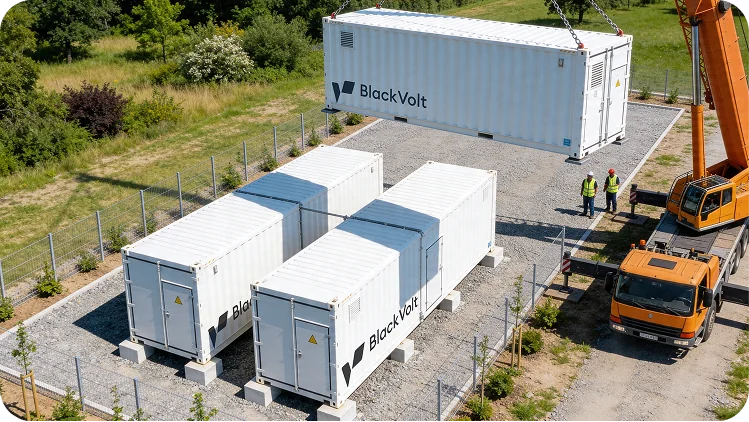
The first Blackvolt project is currently under construction with 18 MW / 36 MWh in Oberndorf bei Salzburg.

Battery storage construction phase: mobile crane setting BESS container at Oberndorf bei Salzburg site (18 MW / 36 MWh)

Commissioning

Commissioning connects the physical asset to energy markets. In this phase, all control and SCADA systems are configured, communication with the grid operator is tested, and prequalification for relevant markets is completed, including frequency containment reserve (FCR), automatic frequency restoration reserve (aFRR), intraday trading, and additional flexibility products.

Blackvolt ensures the asset can generate revenue from day one of operations. The algorithm-supported marketing strategy is activated in parallel to technical commissioning.

Operations & Maintenance

Ongoing technical and commercial operations management is delivered through Tier-1 service partners under internal monitoring and management by Blackvolt Operations and Management GmbH, a dedicated subsidiary.

This subsidiary administers project SPVs commercially and operationally, enforces all safety standards, oversees maintenance and repair cycles, secures the required technical inspections and expert reports (Plaketten, Gutachten), and runs continuous performance monitoring. For investors this means the developer remains accountable through operations.

Why integrated project development matters

Risk control across the full lifecycle

When one company manages the entire process, risks are surfaced early, not when they have already produced costs. A grid capacity bottleneck identified in phase 01 prevents capital misallocation in phase 06. This continuous risk control is a central factor in BESS project bankability.

Quality without interface losses

Every handoff between separate service providers carries the risk of information loss. If the developer does not know what the assessor documented and the construction supervisor does not know what the permitting planner specified, errors occur. At Blackvolt, project knowledge sits with one team.

One contact for investors and municipalities

For investors running due diligence and for municipalities hosting a BESS project, the integrated structure simplifies communication. Questions on permitting, construction, and operations are answered by the same people who carry operational accountability.

Frequently asked questions on battery storage development

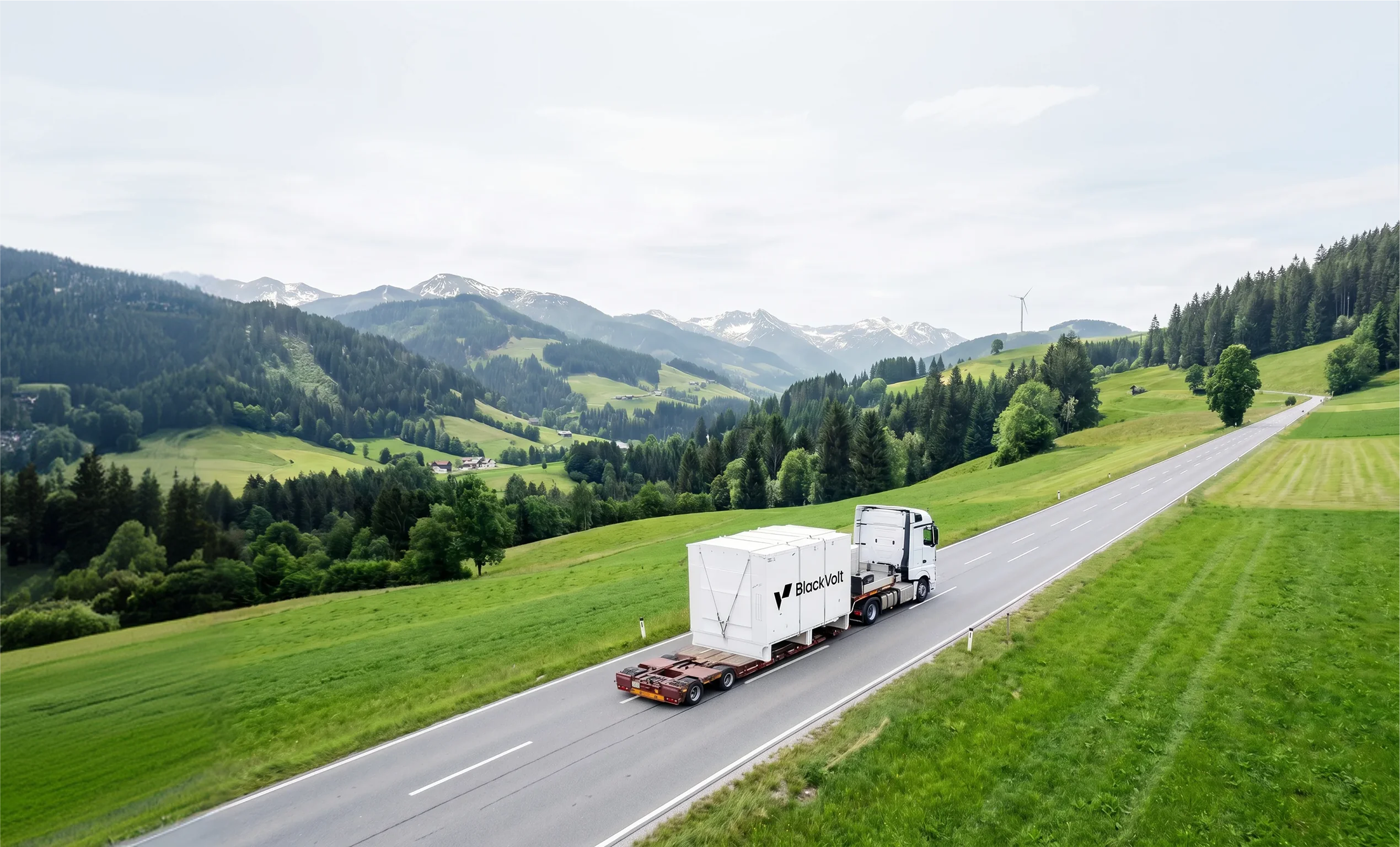
Logistics for Austrian utility-scale battery storage project — transport on mountain road

Your project startswith a conversation

You have a site, a parcel, or a defined project intent. Speak with our development team about the next steps.

Discuss your project