For Investors

Battery Storage Investment:
Infrastructure for the European Energy Transition

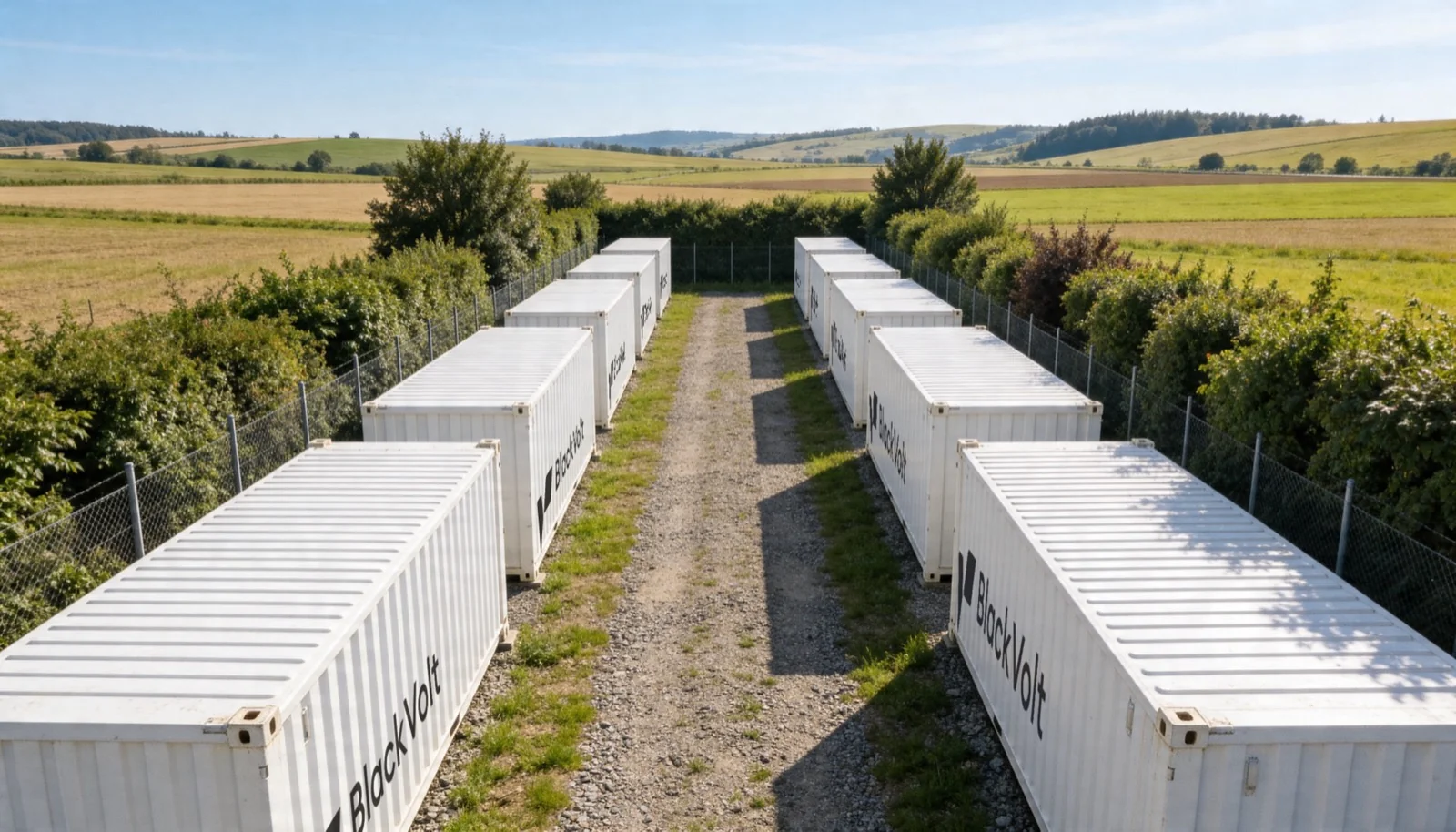
Utility-scale battery energy storage systems (BESS) are among the fastest growing infrastructure asset classes in Europe. In Austria, a substantial structural storage requirement meets an early market window: regulatory tailwind, declining technology costs, and rising market volatility. Blackvolt develops, builds, and operates utility-scale battery storage along the full value chain, as the first operator with this depth of project maturity in the Austrian market.

54 MW

In Construction

251 MW

Ready to Build

950 MW

Late-Stage Pipeline

2,500 MW

Total Portfolio

Market opportunity

Market Opportunity: Why Battery Storage, Why Now

The European energy market is undergoing its deepest structural transition in decades. Within this transition, an asset class is emerging that is at once system-critical infrastructure and a commercially viable investment: utility-scale battery storage. Austria offers a particularly attractive environment.

5.1 GW

by 2030

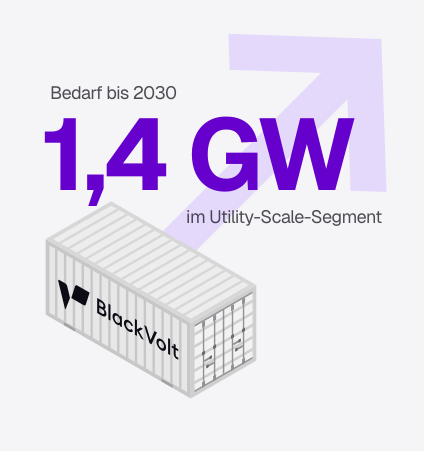
According to studies by PV Austria, the Austrian Power Grid (APG), and TU Graz, Austria requires approximately 5.1 gigawatts of battery storage capacity by 2030, of which 1.4 GW is in the utility-scale segment. By 2040, the projected requirement rises to 8.7 GW. Currently installed capacity sits well below those targets. The gap between policy target and installed reality is an infrastructure shortfall that private capital must close.
−45%

Technology cost

Prices for LFP (lithium iron phosphate) battery cells, the dominant chemistry for stationary utility-scale storage, have fallen to approximately USD 70 per kilowatt-hour. The cost decline fundamentally changes project economics: projects that sat at the threshold of viability two years ago are clearly in positive territory today.

+25%

Revenue potential

With the introduction of the 15-minute settlement period in European electricity markets in October 2025, the granularity of power trading quadrupled. For battery storage, this means more tradable time windows per day and a meaningful uplift in arbitrage revenue. Industry analysis places the effect at more than 25 percent of additional revenue potential.

Structural

Flexibility demand

Austria has committed to balancing 100 percent of its electricity consumption from renewable sources by 2030. More solar and wind capacity on the grid means more volatility, and a structurally growing requirement for flexible storage. Utility-scale battery storage is the fastest and most scalable technology to address that requirement.

Energy infrastructure as the foundation of battery storage investments in Austria

Project quality

Project Quality: A 2,500 MW Portfolio with Concrete Substance

A battery storage investment stands or falls on the quality of the underlying projects. Blackvolt holds one of the most mature BESS portfolios in the Austrian market: projects across multiple development stages, with a concrete pipeline that extends well beyond planning.

2,500 MW

Total Portfolio

54 MW

In Construction

251 MW

Ready to Build

950 MW

Late-Stage Pipeline

> 30

Projects in Development

> 600 MWh

Permitted Capacity

Beyond these flagship assets, more than 30 additional sites are in various development stages, representing over 2 GWh of additional capacity in the pipeline. This depth of project maturity has no equivalent in the Austrian BESS market.

Execution capability

Execution Capability: End-to-End Along the Full Value Chain

The difference between a development portfolio on paper and realised infrastructure assets lies in execution capability. Blackvolt controls the full value chain: from initial site assessment through ongoing operation.

  1. Site analysis and land acquisition

    Every project begins with a systematic site assessment: grid capacity, land availability, permitting feasibility, and logistical access are analysed before a development decision is taken. Land acquisition is handled directly; Blackvolt secures sites independently and negotiates use agreements with landowners and municipalities.

  2. Feasibility study and permitting

    Environmental compatibility, technical feasibility, and economic viability are documented in structured studies. The permitting process is managed internally, with detailed knowledge of which regulatory requirements apply in which Austrian federal state and how authority procedures are navigated efficiently.

  3. Grid connection and construction

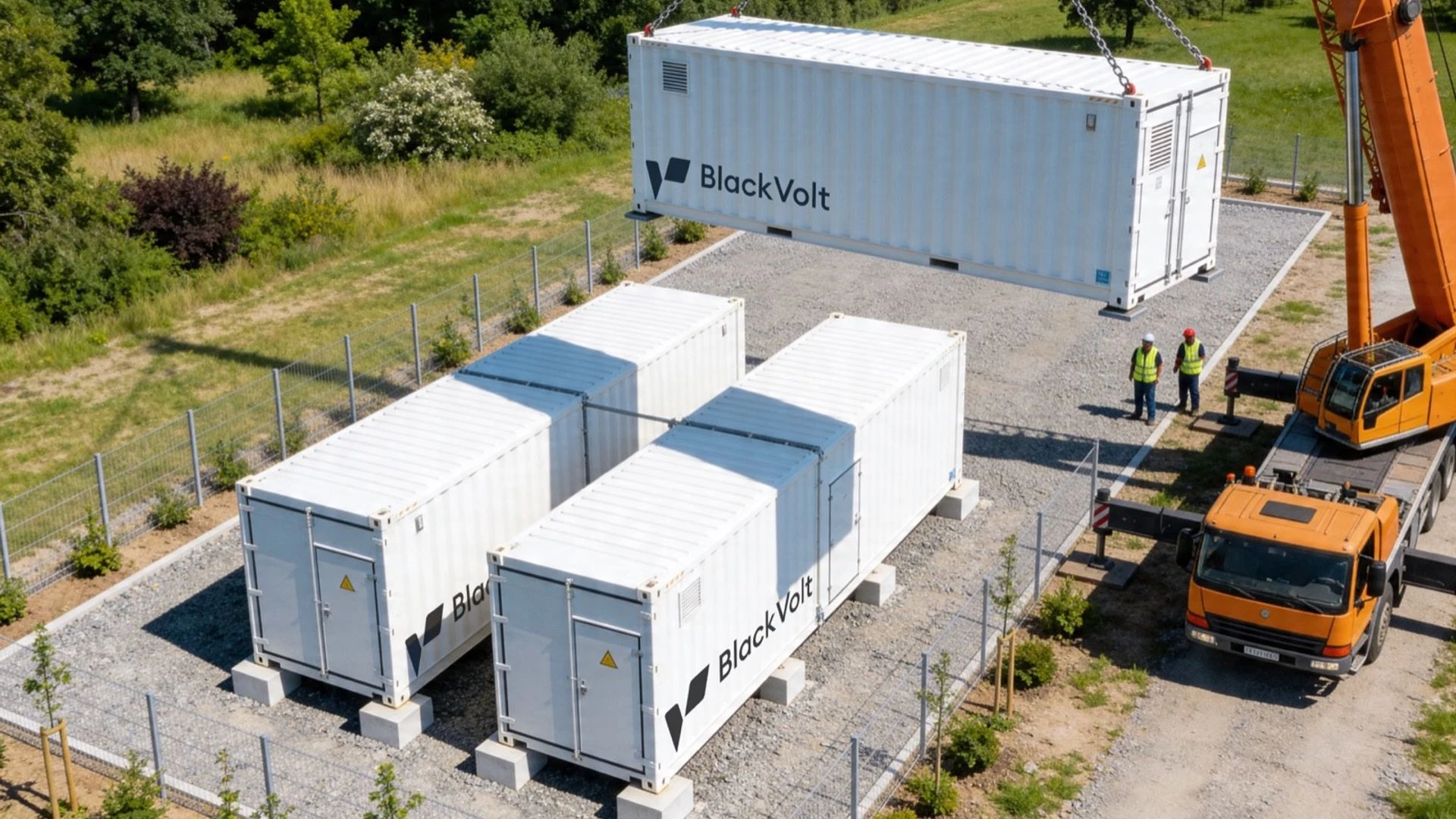
    Grid connection is one of the most critical bottlenecks in BESS project development. Blackvolt negotiates grid access directly with the relevant grid operator and manages the construction phase in close coordination with the EPC contractor. Construction is supervised and quality-assured by Blackvolt throughout.

  4. Operations and maintenance via in-house subsidiary

    After commissioning, Blackvolt Operations and Management GmbH takes over ongoing operation. The subsidiary is responsible for the administrative and commercial management of the project SPVs, compliance with all safety standards, maintenance servicing, and technical inspections and certifications. For investors, this means a single counterparty across the full project lifecycle.

This vertical integration is a meaningful factor in the bankability of the projects: investors and lenders have one counterparty for development, construction, and operation, with continuous accountability and clearly delineated responsibilities.

Capital markets

Capital-Markets Competence: Structural Capability for Infrastructure Investment

Behind Blackvolt stands a team that combines experience from investment banking, technology, energy markets, and M&A. This combination is deliberate: battery storage assets are simultaneously physical infrastructure and structured finance products. Understanding both, and executing on both operationally, is the core of Blackvolt's capability.

Financing capability

The team brings long-standing experience in structuring infrastructure finance. From SPV setup, through negotiation with capital providers, to managing due diligence: the processes that institutional investors expect are operationally embedded at Blackvolt.

Technology understanding

Algorithm-driven trading strategies, battery chemistry, inverter technology, grid integration. The technical know-how spans from system architecture to market interface. This supports informed technology decisions and a marketing strategy built on a diversified revenue stack.

Operational delivery

Project development is not a desk job. Land negotiations, regulatory submissions, construction site coordination: the Blackvolt team has the operational record of not only planning projects, but realising them.

Regulatory tailwind

Regulatory Tailwind: Austria as a BESS Location

Austria offers a regulatory environment for battery storage investment that is positively differentiated from other European markets along several dimensions.

Political commitment to storage infrastructure

Austrian energy and climate policy has identified the expansion of storage capacity as a system-critical prerequisite for the energy transition. The 2030 target of 100 percent renewable electricity, on a balanced basis, is not achievable without significant storage capacity. This policy framing, anchored in the Renewable Energy Expansion Act (Erneuerbaren-Ausbau-Gesetz, EAG), creates planning certainty for investors.

Early market window

The Austrian utility-scale BESS market is in an early development phase. The number of operators with advanced project maturity is limited. For investors, this means access to projects in a market that has not yet been saturated by large institutional players, with corresponding value creation potential for early-stage entry.

Stable regulatory foundation

Compared with markets that have seen frequent regulatory revisions, Austria offers a relatively stable framework for energy infrastructure. Participation in the European balancing reserve markets (FCR, aFRR), clearly defined permitting procedures, and a reliable grid access regime through APG form the regulatory foundation on which long-term investment decisions can be built.

Diversified Revenue Stack, Not a Single Bet

The economic viability of a battery storage investment does not depend on a single revenue channel. Blackvolt operates on a diversified revenue stack: a combination of revenue streams that are served simultaneously or sequentially.

The approach covers balancing reserve markets (FCR and aFRR), wholesale and intraday arbitrage, peak shaving, and grid services such as reactive power. Prioritisation is algorithm-driven in real time: the system analyses market prices, balancing reserve calls, and battery state, and allocates available capacity automatically to the most remunerative channel at any given moment.

For investors, revenue stacking means risk diversification at the revenue layer. When prices in one market segment decline, others compensate. This structural hedge reduces revenue volatility and stabilises the long-term investment base.

  • Arbitrage

    Wholesale and intraday trading

  • FCR & aFRR

    Primary and secondary balancing reserve

  • Peak shaving

    Demand peak management

  • Reactive power

    Voltage stabilisation

Frequently asked questions

Next steps

The Austrian BESS market is at the beginning of a multi-year growth cycle. If you would like to assess the investment opportunity in utility-scale battery storage, speak directly with our team.

Legal notice

The content of this page is provided for general information only and does not constitute an offer or solicitation to invest, a public offering, or investment advice. Forward-looking statements, in particular those relating to market developments, project pipelines, and revenue potential, are subject to uncertainties and may differ materially from actual outcomes. Market figures and forecasts are based on publicly available studies and industry estimates and are reproduced without warranty. For individual investment decisions, we recommend consultation with a qualified financial adviser.